Thanks for joining us at MNL!
Thanks for stopping by the Mills & Wright booth at this year’s Municipalities NL conference! It was great to meet so many people from communities all over the province. We hope your bulbs made it home safely. Below you’ll find everything you need to get them planted this fall, before the ground freezes, so you can enjoy them next spring and summer.
About your bulbs
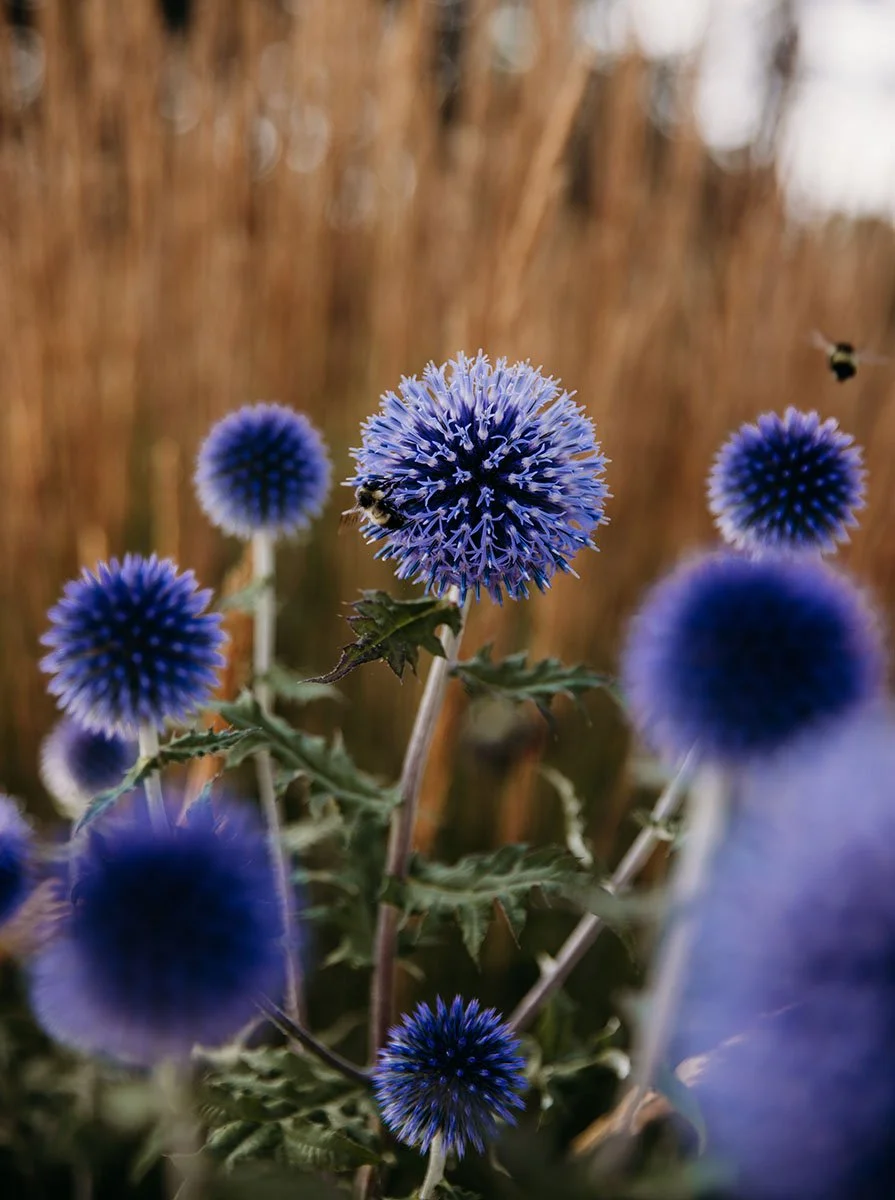
Your bulbs are alliums, also known as ornamental onions. Each bag holds a random mix of a few different kinds, so you won’t know exactly what you’ve got until they bloom! Alliums grow tall, straight stems topped with round clusters of small, star-shaped flowers, usually in shades of purple, pink or white. Heights and flower sizes vary between kinds, so expect a bit of variety in your garden. They’re hardy, and bees and other pollinators love them.
Planting
Plant these bulbs in fall.
If you cannot plant your bulbs right away, store them in a cool, dry, dark location, like a basement.
These bulbs need full sun and they do best in well-drained soil.
Plant them with the pointy end up about 13 cm (5 in) deep and 10 to 13 cm (4 to 5 in) apart.
Water thoroughly after planting.
Growing
Plant them in groups for best effect.
Alliums are displayed at their loveliest when placed among perennial plants in the border. The tall alliums in particular are very impressive when towering up above lower-growing plants or ground covers.
Most species bloom in early summer, just after the spring-flowering period and just before the exuberant full bloom of summer.
Taking Care
These bulbs are deer resistant and work great in areas where deer or rodents are a problem.
Alliums are great as cut flowers and will remain beautiful for a long time, even as dried flowers.
Winterizing
After flowering, the leaves should be allowed to die down. The leaves will gather sunlight and provide nourishment for next year’s show.
It is helpful to fertilize the bulbs through winter and also as the foliage dies down in summer.
These bulbs come back for several years.
Got anemones too?
Some bags also contain anemone corms (the little shriveled brown acorn-looking things). Anemones are low-growing plants with simple, daisy-like flowers that bloom close to the ground. Plant them in fall like the alliums, but they need a few things done differently:
For best results, soak the corms in a bowl of water for 3 hours before planting.
Plant them in humus-rich, well-drained soil.
Plant them 8 cm (3 in) deep and 5 to 8 cm (2 to 3 in) apart. If you’re not sure which way is up, plant them on their edge.
They look good planted in groups at the base of trees or in wooded areas, and at the front of borders or rock gardens.
Water them often until they flower. Once they’re flowering, water lightly. They can handle drier conditions in summer when the plant is dormant.
Fertilize through winter and as the foliage dies down in spring.
Bulb Planting Instructions